

National Energy Data Center of Mongolia
1. Enhancing Energy Efficiency The objective is to reduce energy losses by more than 30 percent below the national average by 2028 and align them with international best practices by 2035. Implementing smart control and monitoring systems—such as SCADA, DMS, and EMS—will optimize power grid operations, enabling a reduction in transmission and distribution losses from 12–18 percent down to 8–10 percent. 2. Increasing Renewable Energy Utilization In line with the target to increase the share of renewable energy to 35 percent by 2035, the integrated use of solar, wind, and ground-source heat pump technologies will be promoted to foster energy-efficient and environmentally friendly energy consumption. 3. Waste Heat Recovery By utilizing the 45–55°C waste heat generated from IT equipment for building heating, up to 83 percent of the waste heat—amounting to up to 300 kW—can be recovered. This will not only fully satisfy the building's thermal energy requirements but also enable the supply of up to 372 kW of excess thermal energy to external consumers.
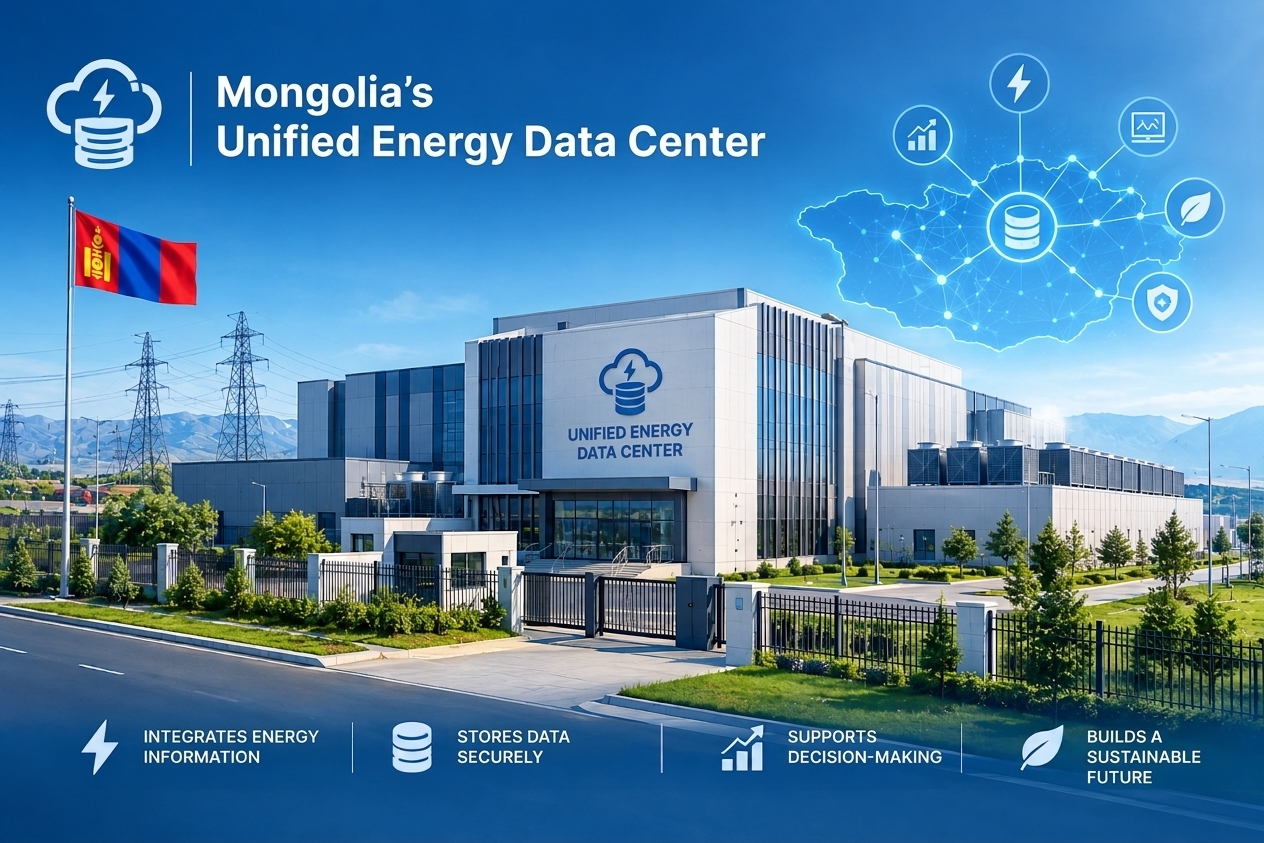
National Energy Data Center of Mongolia
1. Enhancing Energy Efficiency The objective is to reduce energy losses by more than 30 percent below the national average by 2028 and align them with international best practices by 2035. Implementing smart control and monitoring systems—such as SCADA, DMS, and EMS—will optimize power grid operations, enabling a reduction in transmission and distribution losses from 12–18 percent down to 8–10 percent. 2. Increasing Renewable Energy Utilization In line with the target to increase the share of renewable energy to 35 percent by 2035, the integrated use of solar, wind, and ground-source heat pump technologies will be promoted to foster energy-efficient and environmentally friendly energy consumption. 3. Waste Heat Recovery By utilizing the 45–55°C waste heat generated from IT equipment for building heating, up to 83 percent of the waste heat—amounting to up to 300 kW—can be recovered. This will not only fully satisfy the building's thermal energy requirements but also enable the supply of up to 372 kW of excess thermal energy to external consumers.
- Project status: It is currently in the preliminary evaluation stage.
- Project proponent: Private Sector
- Project phase: Phase 2
Дэлгэрэнгүй тайлбарDetailed information詳細情報Informations détailléesDetaillierte Informationen
PROJECT PHASE

Project Initiation
Initiated by line ministries and the private sector




National Energy Data Center of Mongolia
1. Enhancing Energy Efficiency The objective is to reduce energy losses by more than 30 percent below the national average by 2028 and align them with international best practices by 2035. Implementing smart control and monitoring systems—such as SCADA, DMS, and EMS—will optimize power grid operations, enabling a reduction in transmission and distribution losses from 12–18 percent down to 8–10 percent. 2. Increasing Renewable Energy Utilization In line with the target to increase the share of renewable energy to 35 percent by 2035, the integrated use of solar, wind, and ground-source heat pump technologies will be promoted to foster energy-efficient and environmentally friendly energy consumption. 3. Waste Heat Recovery By utilizing the 45–55°C waste heat generated from IT equipment for building heating, up to 83 percent of the waste heat—amounting to up to 300 kW—can be recovered. This will not only fully satisfy the building's thermal energy requirements but also enable the supply of up to 372 kW of excess thermal energy to external consumers.
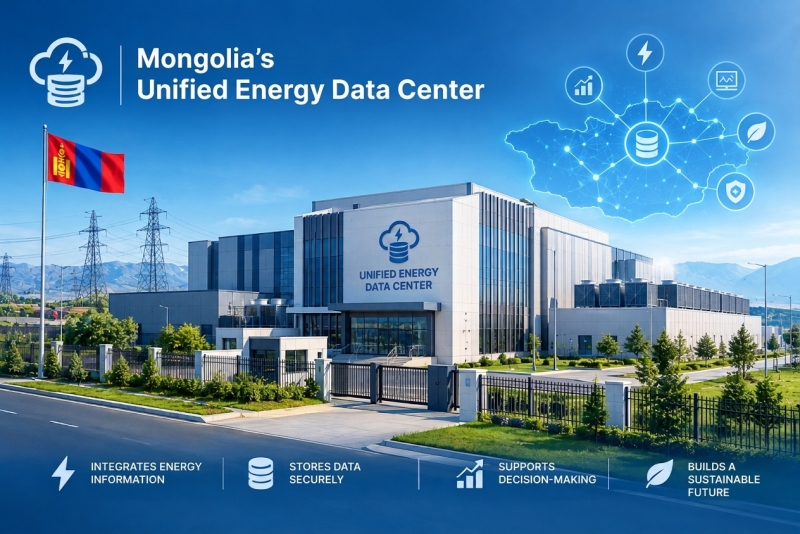
PROJECT SIGNIFICANCE
1. Enhancing Energy Efficiency
The objective is to reduce energy losses by more than 30 percent below the national average by 2028 and align them with international best practices by 2035. Implementing smart control and monitoring systems—such as SCADA, DMS, and EMS—will optimize power grid operations, enabling a reduction in transmission and distribution losses from 12–18 percent down to 8–10 percent.
2. Increasing Renewable Energy Utilization
In line with the target to increase the share of renewable energy to 35 percent by 2035, the integrated use of solar, wind, and ground-source heat pump technologies will be promoted to foster energy-efficient and environmentally friendly energy consumption.
3. Waste Heat Recovery
By utilizing the 45–55°C waste heat generated from IT equipment for building heating, up to 83 percent of the waste heat—amounting to up to 300 kW—can be recovered. This will not only fully satisfy the building's thermal energy requirements but also enable the supply of up to 372 kW of excess thermal energy to external consumers.
KEY PROJECT INDICATORS
Project Initiator
- Private Sector
Type of Partnership Agreement
- Build, Operate, and Transfer
Sector Ministry
- Ministry of Energy
Project Progress
- It is currently in the preliminary evaluation stage.